Addis Ababa

National Museum of Ethiopia

The National Museum of Ethiopia offers a journey through the country’s deep past and evolving identity. Best known as the home of Lucy (Dinknesh) one of the most important paleoanthropological discoveries in the world  the museum traces human history back millions of years. Beyond this famous fossil, visitors encounter archaeological finds, ancient tools, royal objects, traditional crafts, and rotating art exhibitions. 

Holy Trinity Cathedral

Standing as one of Addis Ababa’s most significant landmarks, Holy Trinity Cathedral represents faith, history, and national pride. Built in the mid-20th century, the cathedral commemorates Ethiopia’s resistance and independence. Inside, visitors are met with high vaulted ceilings, intricate stained-glass windows, and murals blending Ethiopian Orthodox symbolism with European influences. The cathedral complex also houses the tombs of Emperor Haile Selassie I and Empress Menen, making it an important site for worshippers and history enthusiasts alike.


Unity Park

Unity Park is a modern cultural landmark set within the grounds of Ethiopia’s historic Grand Palace. The park brings together restored imperial buildings, landscaped gardens, cultural exhibits, and curated museums that tell the story of Ethiopia’s monarchy and regional diversity. Guests can walk through former royal residences, view historical artifacts, and enjoy peaceful green spaces. Designed to educate and inspire, Unity Park offers a fresh and engaging way to experience Ethiopia’s heritage in one place.

Merkato (Addis Mercato)

Merkato is the commercial heartbeat of Addis Ababa and one of the largest open-air markets in Africa. Sprawling and energetic, it reflects the daily rhythm of the city. The market is organized into informal zones where spices, grains, metalwork, baskets, electronics, coffee, and household goods are traded in vast quantities. Visiting Merkato is not just about shopping it’s an immersion into local life, commerce, and the organized chaos that keeps the city moving.

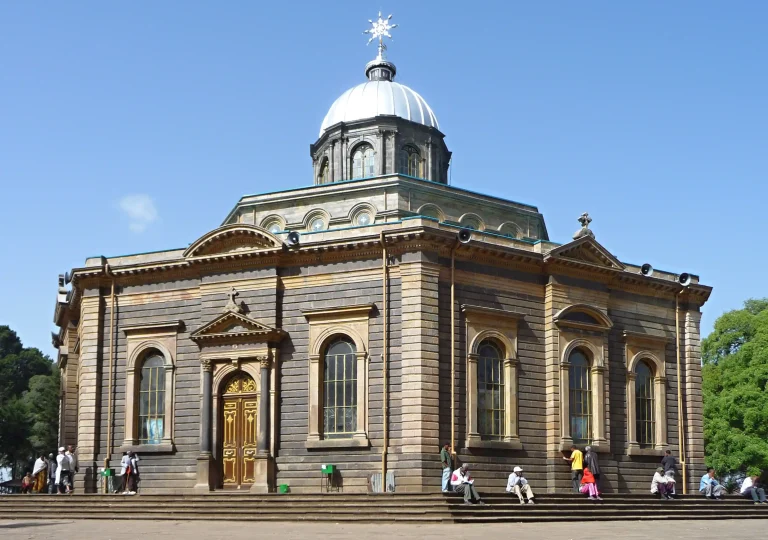
St. George Cathedral

St. George Cathedral holds a special place in Ethiopian history as a symbol of victory and unity. Constructed after the Battle of Adwa in 1896, the cathedral honors Ethiopia’s successful defense against colonial forces. Its distinctive octagonal shape and interior artwork showcase traditional Ethiopian Orthodox design. The adjoining museum displays religious artifacts, ceremonial clothing, and historic items connected to the Ethiopian monarchy and church.


Ethnological Museum

Located within the former imperial palace on the Addis Ababa University campus, the Ethnological Museum provides insight into the everyday lives of Ethiopia’s many ethnic communities. Exhibits focus on social traditions, belief systems, crafts, agriculture, and domestic life rather than grand monuments. One of the museum’s most compelling features is the preserved private quarters of Emperor Haile Selassie, offering a rare, personal perspective on Ethiopia’s recent history.

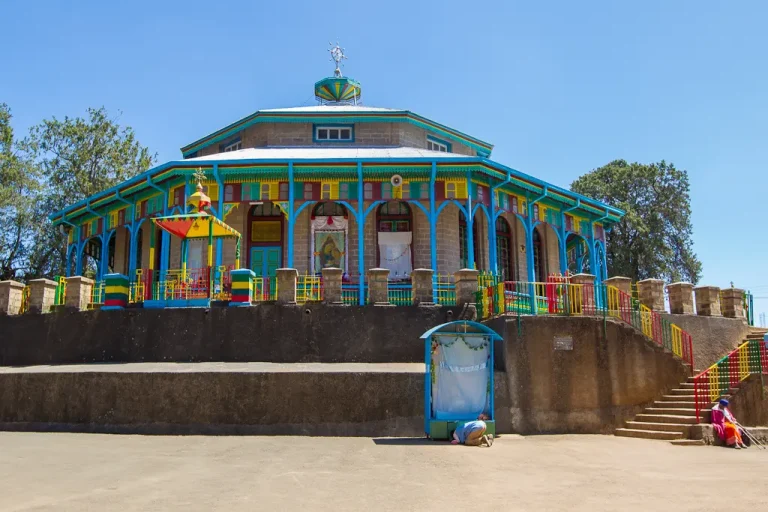
Entoto Maryam Church

Perched high in the Entoto Mountains, Entoto Maryam Church is one of Ethiopia’s most historically significant religious sites and the spiritual heart of Addis Ababa’s origins. Built in the late 19th century by Emperor Menelik II, the church played a central role in the founding of the capital before the city moved to the plains below.

Surrounded by eucalyptus forests and cool mountain air, Entoto Maryam offers visitors a peaceful retreat from the city while revealing deep layers of Ethiopian history.